
Understanding Supported Living for Adults: What It Is and Who It’s For
Updated: May 12
We believe everyone deserves the opportunity to live a fulfilling, happy, and purposeful life. For many individuals with complex needs, achieving that goal means finding the right balance between receiving essential care and maintaining personal independence. That is where supported living comes in. But what exactly does it entail, and who is it designed to help?

What is Supported Living for Adults?
At its core, supported living allows service users to live independently while retaining complete control over how, where, and when they receive support.
It is a highly personalised alternative to residential care that empowers individuals to live in their own homes or shared accommodations within their local community.
Because no two people are the same, no two care plans are the same. Our flexible support is co-created with the service user. Whether someone requires just a few hours of support a week or 24-hour complex care, we focus on their unique interests, priorities, and skills.
Our person-centred approach to supported living generally focuses on four key areas:
Daily Living Skills: Assisting with personal care, healthy cooking, and general household management.
Financial Empowerment: Supporting individuals with budgeting, understanding their benefits, and managing personal finances.
Community Integration: Helping individuals actively access education, seek employment, and participate in social and leisure activities.
Positive Behavioural Support (PBS): Using evidence-based strategies to understand the "why" behind behaviours that challenge, focusing heavily on improving communication and overall quality of life.

Who Needs Supported Living?
Supported living adults is designed for individuals who want to live an independent life but require a tailored level of care to do so safely and successfully.
We provide bespoke care packages for adults (18 - 65) who are living with:
Learning Disabilities & Developmental Conditions: Including Down’s Syndrome, autism, and neurodiverse needs.
Mental Health Issues: Individuals with conditions like bipolar disorder, schizophrenia, or depression require support to manage daily life.
Physical Disabilities: Individuals with severe physical impairments, cerebral palsy, or mobility issues.
Complex Needs & Multiple Disabilities: People with combinations of disabilities, such as sensory impairments (deafblindness).
Acquired Brain Injuries (ABI): Individuals recovering from or living with brain damage due to accidents, strokes, or infections.
Chronic/Progressive Ailments: People with conditions like MS, Parkinson's, or cancer need support to maintain independence.
Other Vulnerable Groups: Individuals in recovery from drug/alcohol dependency, people with histories of homelessness, and young people transitioning from care.
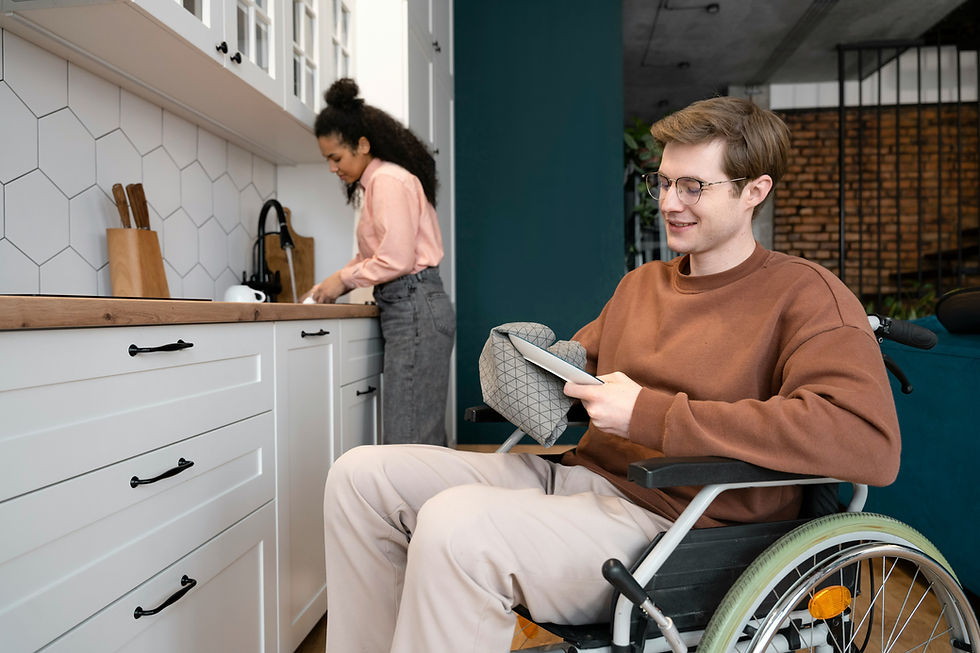
Types Of Accommodation - Supported Living Adults
When it comes to accommodation, service users have choices. They can opt for Independent Living in their own flat or house, or Shared Living, which allows them to connect with like-minded individuals in a communal setting while sharing household costs.
Single Occupancy
This model focuses on maximum privacy and independence. Residents live in their own self-contained home, which typically includes a private bedroom, living area, kitchen, and bathroom.
Support Level: Support is often "floating," meaning staff visit for a set number of hours per week to assist with specific tasks like budgeting, shopping, or appointments.
Suitability: Ideal for individuals who can manage most daily routines independently but require intermittent professional assistance.
Core and Cluster Model
This is a hybrid approach combining independent living with a "safety net" of nearby support. It consists of several individual, self-contained flats or houses (the cluster) located around or near a central staff hub (the core).
Key Features: Residents have their own front doors and private facilities, but share access to communal areas like a lounge or garden for social activities.
Support Level: A dedicated "core" team is available nearby 24/7 for emergencies or planned check-ins, allowing for reduced direct care during stable periods while maintaining safety.
Benefits: It fosters a sense of community and reduces social isolation while maintaining individual autonomy.
Multiple Occupancy (Shared Housing)
In this model, residents live together in a single property, such as a large house, where they have their own private bedrooms but share communal spaces like the kitchen, bathroom, and living room.
Structure: Often legally classified as a House in Multiple Occupation, if occupied by three or more unrelated people.
Support Level: Support is typically provided on-site and may be shared among the residents, making it a cost-effective option for those who benefit from more frequent oversight or social interaction.
Suitability: Best for individuals who enjoy a "family atmosphere," need higher staffing ratios, or are transitioning from more intensive care settings.

Therapeutic & Educational - Children's Residential Services
We also provide Specialist Housing for Children & Young People (aged 16+). We proudly support young people with learning disabilities and associated mental health needs who are transitioning to adulthood. Our highly trained specialist support staff help them reach their full potential in their own homes, equipping them with the skills to safely navigate their complex emotional needs.
Referrals, Placements, And Transitional Teams - Finding the Right Provider
Finding the right setting for those living with behaviours that challenge can be difficult. It is even harder to find a provider that takes the time to understand why those behaviours occur in the first place.
At Keyline Care, our CQC-rated 'Good' services are built on trust, respect, and over a century of combined management expertise. Our dedicated staff work closely with service users and their networks to remove barriers that restrict choice and equip them with the skills to self-manage and thrive.
Are you looking for a supported living placement for yourself, a loved one, or a client? Whether you are based in Nottinghamshire, Derbyshire, Leicestershire, or Lincolnshire, our team is here to help. Contact Keyline Care today or fill out our
Referral Form to start the journey toward independence, wellbeing, and potential.
Keyline Care Head Office
Unit 26, Bolsover Street, Hucknall, NG15 7TZ
📞 0115 648 6713


Comments